Heritage · 9 min read · 1,993 words
Why the Bald Eagle Is America's Symbol: The Great Seal, Franklin's Turkey and the National Bird
From the 1782 Great Seal to national bird in 2024: what the eagle's symbols mean, what Franklin actually said about the turkey, and how it came back from 417 pairs.
Published
Editorial Desk — Research, drafting, and fact-checking for The Journal.
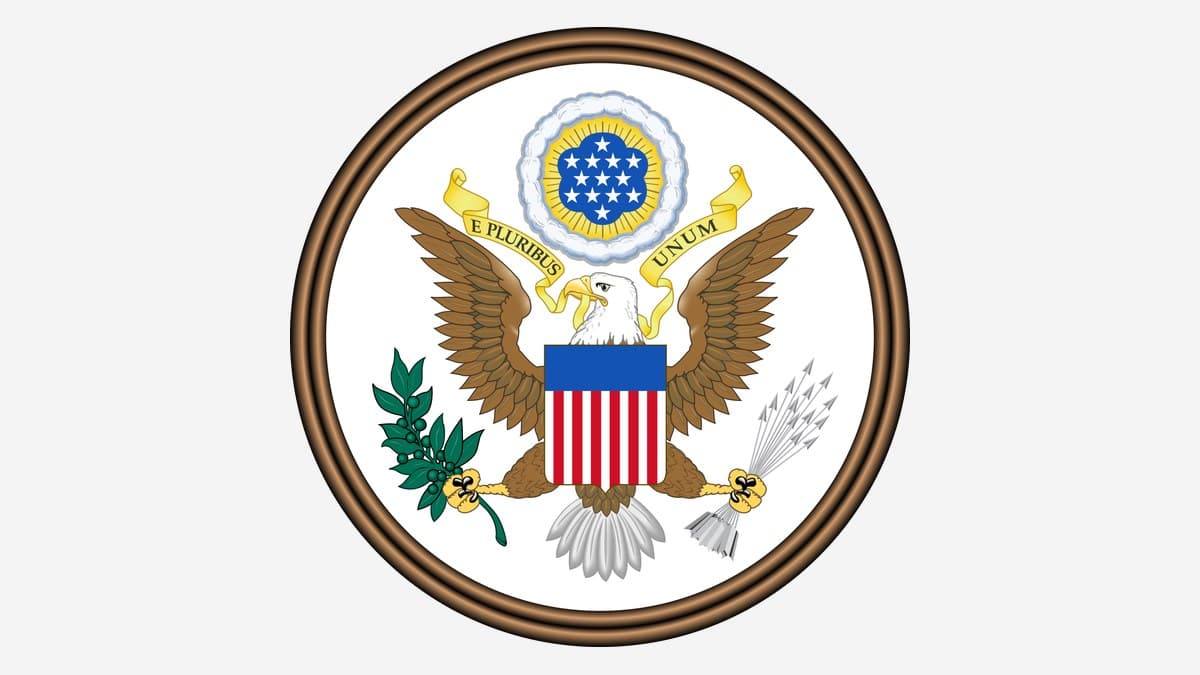
Most Americans have handled a bald eagle without noticing it. It is on the back of the one-dollar bill, on the seal of the President, and on insignia across the armed forces. Yet for 242 years no law actually named it the national bird. That only happened on December 23, 2024. The story in between runs through a secretary of Congress with no artistic training, a joke by Benjamin Franklin that is still repeated as fact, and a near-extinction the country managed to reverse.
Congress chose the eagle in 1782, after six years of trying
On July 4, 1776, the same day it adopted the Declaration of Independence, the Continental Congress asked Benjamin Franklin, John Adams and Thomas Jefferson to design a seal for the new nation. Their proposal did not feature an eagle at all. Franklin's own suggestion was a biblical scene of Moses at the Red Sea, with Pharaoh's army being overwhelmed, under the motto "Rebellion to Tyrants is Obedience to God." Congress set the committee's work aside.
A second committee in 1780 added elements that survived: thirteen red and white stripes, a constellation of thirteen stars, and an olive branch for peace. A third committee in May 1782 relied on William Barton, a young Philadelphia lawyer who knew heraldry. Barton's design did include an eagle, but a small crested white eagle of the European imperial type, not an American bird.
Congress was still not satisfied. On June 13, 1782, it handed everything to its secretary, Charles Thomson. Thomson was not an artist, but he made the decision that defined the seal. According to the State Department's history of the Great Seal, he felt the new nation's symbol should be strictly American, so he replaced Barton's imperial eagle with the native American bald eagle and made it the centerpiece. Barton then refined the drawing, raising the wings and fixing the number of arrows at thirteen. Congress adopted Thomson's written description on June 20, 1782, the same day he submitted it. What Congress approved was a description in heraldic language, not a picture, which is why seals and engravings since then have varied in style while the official wording has not changed.
What the eagle on the Great Seal is holding, and why
Thomson attached a short "Remarks and Explanation" to his design. It is the only official statement of what the symbols mean, and it is more specific than most modern summaries.
- ★The shield on the eagle's breast has thirteen stripes for the states, joined under a blue chief that represents Congress. Thomson wrote that the states are "all joined in one solid compact entire."
- ★The eagle holds the shield alone, with no other figures supporting it. Thomson's explanation was that this showed "the United States of America ought to rely on their own Virtue."
- ★The olive branch in one talon and the thirteen arrows in the other stand for peace and war. In Thomson's words, they "denote the power of peace & war which is exclusively vested in Congress."
- ★The scroll in the eagle's beak carries E Pluribus Unum, "out of many, one," which Thomson took from the first committee's report.
- ★The constellation of thirteen stars above the eagle "denotes a new State taking its place and rank among other sovereign powers."
That last point is easy to pass over. In 1782 the war was not formally over, and the United States was asking the monarchies of Europe to treat it as an equal. An eagle holding its own shield, deciding its own peace and war, was a claim to sovereignty as much as a piece of decoration.
Both sides of the Great Seal went onto the back of the one-dollar bill in 1935, which is why the eagle is the version of the seal most Americans know best.
Did Benjamin Franklin really want the turkey?
No, and the letter usually quoted as proof says something different from what people assume. On January 26, 1784, Franklin wrote privately from France to his daughter, Sarah Bache. He was discussing the badge of the Society of the Cincinnati, a new society of Continental Army officers whose membership was to pass to their eldest sons. Some critics said the eagle on the Society's badge looked like a turkey. Franklin ran with the joke:
For my own part I wish the Bald Eagle had not been chosen as the Representative of our Country. He is a Bird of bad moral Character. He does not get his Living honestly.
He went on to call the turkey "in comparison a much more respectable Bird, and withal a true original Native of America," one that "would not hesitate to attack a Grenadier of the British Guards who should presume to invade his Farm Yard with a red Coat on." The letter was aimed at the Society's hereditary membership, which Franklin and others thought too close to a European aristocracy. He never proposed the turkey for the Great Seal, and his own seal design from 1776 had no bird in it. Monticello's historians add that no evidence has been found of Jefferson having a strong preference for either bird.
Read in full, the letter is less a vote against the eagle than a warning against inherited rank in a republic. That is a point worth keeping, even if the turkey trivia is not.
From national emblem to near extinction
By the twentieth century the bird on the seal was disappearing from the country it represented. On June 8, 1940, Congress passed the Bald Eagle Protection Act, making it a crime to kill, possess or sell bald eagles. Its preamble is unusual for a wildlife law because it explains the bird's political meaning:
by that Act of Congress and by tradition and custom during the life of this Nation, the bald eagle is no longer a mere bird of biological interest but a symbol of the American ideals of freedom
Protection from hunting was not enough. The pesticide DDT built up in the fish that eagles eat and interfered with how they formed eggshells, so the shells thinned and broke. The U.S. Fish and Wildlife Service records that the lower 48 states fell to 417 known nesting pairs in 1963. In 1967 bald eagles south of the 40th parallel were listed as endangered. The Environmental Protection Agency issued its cancellation order for DDT in 1972, and the recovery that followed is one of the clearest successes in American conservation.
- ★1995: reclassified in the lower 48 states from endangered to threatened.
- ★2007: removed from the federal list of endangered and threatened wildlife, with an estimated 9,789 breeding pairs.
- ★2019 breeding season: an estimated 316,700 bald eagles in the lower 48 states, including 71,467 occupied nests, according to the Fish and Wildlife Service's 2020 population report.
The bald eagle is still protected today under the Bald and Golden Eagle Protection Act and the Migratory Bird Treaty Act, even though it no longer needs the endangered list.
Why it took until 2024 to become the "national bird"
The 1782 resolution adopted a seal. It did not designate a national bird, and for more than two centuries the eagle's status rested on that seal and on custom. Congress had named a national flower, the rose, in 1986 and a national tree, the oak, in 2004, but not a bird.
Senate bill S. 4610 was introduced on June 20, 2024, the anniversary of the Great Seal's adoption. It passed the Senate by unanimous consent on July 29 and the House by voice vote on December 16, and it was signed on December 23, 2024, as Public Law 118-206. The White House thanked a bipartisan group of sponsors, among them Republican Senators Cynthia Lummis and Markwayne Mullin and Republican Representatives Brad Finstad and Tom Emmer, alongside Minnesota Democrats. The law adds one line to the U.S. Code: "The bald eagle (Haliaeetus leucocephalus) is the national bird." It also states that the designation does not change any federal policy or regulation, so the change was formal, not practical.
The eagle that turned its head
A popular story says the eagle on the presidential seal looks toward the arrows in wartime and toward the olive branch in peace. That isn't true, but it comes from a real change. The presidential coat of arms was not fixed by law for most of American history. The White House Historical Association notes that President Rutherford B. Hayes used a version with the eagle's head turned toward the arrows, and the 1916 presidential flag kept that pose.
Near the end of the Second World War, President Franklin Roosevelt's staff proposed turning the head toward the olive branch. Roosevelt died before the redesign was finished. President Harry Truman approved it in Executive Order 9646 on October 25, 1945, weeks after the war ended. The design has been fixed by executive order since then, with stars added for new states, and it does not switch with events. The Great Seal itself was never part of this story; its official description has not changed since 1782.
Why the eagle still works
This part is our view rather than the historical record. Charles Thomson could have kept a European heraldic eagle, as Barton first drew it. He chose the bird that lived only on this continent, holding its own shield with no one else propping it up. Congress repeated the same idea in 1940, calling the eagle "a symbol of the American ideals of freedom," and again in 2024. Self-reliance, a nation that decides its own peace and war, and a union of many states under one government are still a fair description of what Americans are meant to defend.
It is also why the back of our own shirt carries a pair of eagle wings in the stars and stripes above the words "We The People." The wings are a modern design, not a copy of the Great Seal, but they come from the same tradition Thomson started in 1782.
Frequently Asked Questions
Why is the bald eagle the symbol of the United States?
The Continental Congress made the bald eagle the centerpiece of the Great Seal on June 20, 1782. Secretary of Congress Charles Thomson chose the native bald eagle over a European-style eagle because he wanted the nation's symbol to be distinctly American. The eagle holds a shield of thirteen stripes, an olive branch and thirteen arrows, which Thomson explained as union, self-reliance and the power of peace and war vested in Congress.
When did the bald eagle officially become the national bird?
On December 23, 2024, when S. 4610 was signed as Public Law 118-206. It added a section to the U.S. Code stating that the bald eagle is the national bird. Before that, the eagle's status came from the 1782 Great Seal and long custom rather than a specific designation.
Did Benjamin Franklin want the turkey to be the national bird?
No. In a private 1784 letter to his daughter, Franklin joked that the eagle on the Society of the Cincinnati's badge looked like a turkey and called the turkey "a much more respectable Bird." The letter mocked the Society's hereditary membership. Franklin never proposed the turkey for the Great Seal, and his own 1776 seal design showed Moses at the Red Sea, not a bird.
Does the eagle on the presidential seal face the arrows in wartime?
No. Earlier versions of the presidential coat of arms showed the eagle facing the arrows, but President Truman's Executive Order 9646 of October 25, 1945 turned its head toward the olive branch. The design is fixed by executive order and does not change with war or peace.
Is the bald eagle still endangered?
No. The bald eagle was removed from the federal endangered and threatened list in 2007. The U.S. Fish and Wildlife Service estimated 316,700 bald eagles in the lower 48 states in the 2019 breeding season. It remains protected under the Bald and Golden Eagle Protection Act and the Migratory Bird Treaty Act.
Sources & Further Reading
- The Great Seal of the United States (history brochure) — U.S. Department of State, National Museum of American Diplomacy
- Charles Thomson, Remarks and Explanation, June 20, 1782 (transcript) — GreatSeal.com
- Benjamin Franklin to Sarah Bache, 26 January 1784 — Founders Online, National Archives
- An Act for the protection of the bald eagle, June 8, 1940 (54 Stat. 250) — U.S. Government Publishing Office
- DDT: A Brief History and Status — U.S. Environmental Protection Agency
- Removing the Bald Eagle in the Lower 48 States From the List of Endangered and Threatened Wildlife (2007) — U.S. Fish and Wildlife Service
- America's Bald Eagle Population Continues to Soar (2021) — U.S. Fish and Wildlife Service
- Public Law 118-206: Designation of bald eagle as national bird — U.S. Government Publishing Office
- Press Release: Bills Signed, December 24, 2024 — The American Presidency Project, UC Santa Barbara
- A Brief History of the Presidential Seal — White House Historical Association
- Executive Order 9646: Coat of Arms, Seal, and Flag of the President — The American Presidency Project, UC Santa Barbara
- Seal of the United States — Thomas Jefferson Encyclopedia, Monticello
Spotted an error? See our corrections policy — we publish fixes rather than quietly editing them away.
About the Author
The B.A.S.R Editorial Team
Editorial Desk · Houston, Texas
The B.A.S.R Editorial Team is the small group of writers and researchers who draft and fact-check articles for The Journal. Team-bylined articles are researched collaboratively and reviewed by founder and publisher Rico Sharma before they go live.
→Full profile and editorial roleContinue Reading
Buyer's Guide · 6 min read
Patriotic T-Shirts: A Buyer's Guide for Men and Women
How to judge fabric weight, fit, print method, and "Made in America" claims before you buy a patriotic T-shirt — plus how to pick the right size the first time.
Values · 5 min read
The Four Pillars of Conservative American Values, Explained
Freedom, patriotism, the rule of law, and opportunity �� where each pillar comes from in the American founding, what it asks of citizens, and how the four hold each other up.