Heritage · 6 min read · 1,299 words
Why 250 Years of Liberty Still Matters
America turns 250 in 2026. What the signers actually risked, where the founding promise was tested, and what a quarter-millennium of self-government proves.
By Rico Sharma
Published · Last updated
Founder & Publisher — Founder of Be American Stay Republican™, based in Houston, Texas.
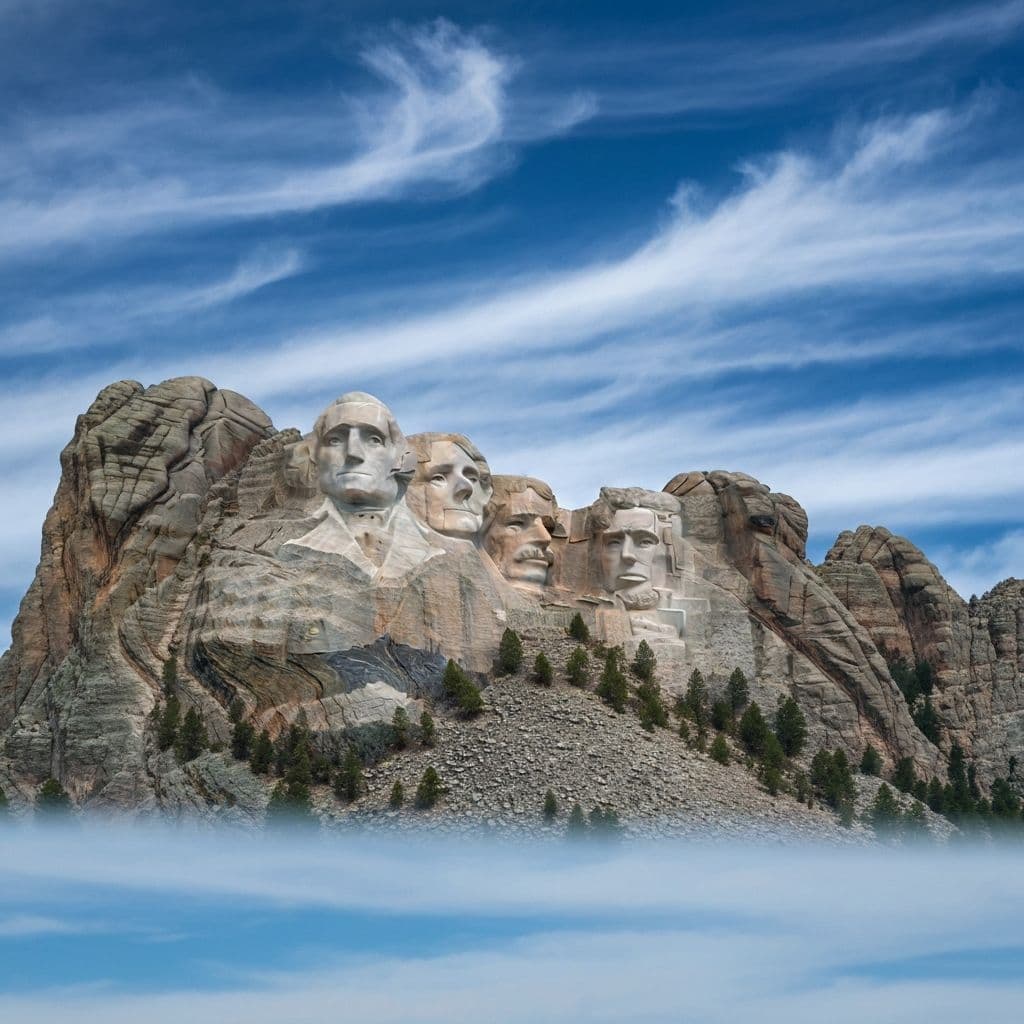
On 4 July 2026 the United States marks 250 years since the Continental Congress adopted the Declaration of Independence. A quarter-millennium is long enough to be worth more than a fireworks display and a sale banner. It is long enough to ask a serious question: what exactly has been sustained for 250 years, how close did it come to failing, and what does its survival actually demonstrate?
The milestone, in plain terms
The anniversary is formally called the semiquincentennial — 250 years. It dates from 4 July 1776, when Congress adopted the Declaration in Philadelphia. It is worth being precise about what that date is and is not. It is not the date the Revolutionary War began, which was April 1775 at Lexington and Concord. It is not the date American independence was won, which came with the Treaty of Paris in 1783. And it is not the birth of the current system of government, which arrived with the Constitution in 1788 and the Bill of Rights in 1791.
1776 is the date of the argument — the moment a set of colonies stopped petitioning for better treatment within an empire and instead published a justification for self-government grounded in universal principle. Everything after it was the work of making the argument true.
A nation founded on an idea, not a bloodline
Most nations are the residue of geography and ancestry: a people who lived in a place, with borders drawn by conquest and dynasty. America is unusual in that it was launched by a written claim about human beings in general.
We hold these truths to be self-evident, that all men are created equal, that they are endowed by their Creator with certain unalienable Rights, that among these are Life, Liberty and the pursuit of Happiness. — That to secure these rights, Governments are instituted among Men, deriving their just powers from the consent of the governed.
Two moves in that passage did the historical work. First, rights are located outside government — "endowed by their Creator" — which makes them something a state may violate but cannot legitimately abolish. Second, governmental authority is made derivative: it exists to secure those rights and is legitimate only by consent. In 1776, when most of the world was governed by hereditary monarchy, this was not a platitude. It was a direct denial of the prevailing theory of political authority.
What the signers actually risked
It is easy to read the Declaration as a ceremonial document because it has been reproduced on so many souvenirs. Read it as what it was and the closing line changes character: the signers pledged "our Lives, our Fortunes and our sacred Honor" to a rebellion against the most powerful navy on earth. Under British law they were committing treason, and the penalty for treason was death.
They were also not obviously going to win. The Continental Army was chronically short of money, powder, boots, and trained men, and it lost more engagements than it won. Independence took eight years of war. Whatever else the founding generation was, it was not a group of men taking a safe position with public opinion comfortably behind them.
The promise was not self-executing
Any honest account of 250 years has to say plainly that the founding promise and the founding reality did not match. A document declaring that all men are created equal was adopted in a country where slavery was legal, where women could not vote, and where the franchise was largely restricted to property-owning men. Those are not footnotes. They are the central tension of American history.
What is striking is the mechanism by which they were addressed. Abolitionists, suffragists, and civil-rights leaders did not, on the whole, argue that the founding principles were wrong and should be discarded. They argued that the country was failing its own stated standard ��� and they quoted the Declaration back at it. Frederick Douglass built his 1852 address "What to the Slave Is the Fourth of July?" on precisely that contradiction. Martin Luther King Jr. framed the 1963 March on Washington around a promissory note that America had signed and not honored.
That pattern is itself an argument for the founding documents. A creed capable of being turned against the injustices of the society that produced it is a creed with real content. The Thirteenth, Fourteenth, Fifteenth, and Nineteenth Amendments were not repudiations of 1776; they were the country being held to it.
What a quarter-millennium actually proves
Two hundred and fifty years of continuous constitutional self-government is historically abnormal. In the same period, most nations on earth have been through revolution, occupation, partition, or wholesale constitutional replacement. The United States has held elections through civil war, two world wars, a depression, and bitter internal division, and has transferred executive power dozens of times without hereditary succession.
The lesson is not that the system is self-maintaining. It is that a few unglamorous structural commitments turned out to be durable under stress:
- ★Written, enforceable limits on power that outlast the people who currently hold it.
- ★Divided authority — between branches, and between federal and state governments — so that no single actor is the whole system.
- ★Regular elections with real consequences and a norm of conceding them.
- ★An independent judiciary able to rule against the government that funds it.
- ★A free press and free citizens able to criticize officials without permission.
Why the anniversary matters now
Anniversaries are useful precisely because inherited things become invisible. Institutions that have worked for generations start to look like weather rather than like achievements, and what looks like weather does not get maintained. The semiquincentennial is an opportunity to make the inheritance visible again — and to notice that every element on the list above depends on citizens who understand it well enough to defend it.
Marking it well does not require much. Read the Declaration in full; it is roughly 1,300 words and repays the ten minutes. Read the Bill of Rights and count how many of its provisions you could have stated accurately beforehand. Learn something specific about the founding era rather than something general. Take a young person to a historical site and explain what happened there. Vote in the local races that decide most of what actually touches your life.
Two hundred and fifty years of liberty matters because liberty is not the default condition of human societies — it is a construction, and constructions require maintenance. The founders framed it as an experiment for good reason. Experiments can fail. That this one has run a quarter of a millennium is a genuine achievement, and the most fitting way to honor it is to leave it in better repair than we found it.
Frequently Asked Questions
What is the 250th anniversary of America called?
The semiquincentennial, marking 250 years since the adoption of the Declaration of Independence on 4 July 1776. It is also referred to as America250.
Did America become independent in 1776?
Independence was declared in 1776 but not secured until the Treaty of Paris in 1783. The Revolutionary War had already begun in April 1775, and the current constitutional system did not take effect until 1788, with the Bill of Rights ratified in 1791.
How can the Declaration say all men are created equal when slavery was legal?
That contradiction is the central tension of early American history. Notably, abolitionists, suffragists, and civil-rights leaders generally did not reject the founding principles — they argued the nation was violating its own stated standard, and quoted the Declaration in support. The Thirteenth, Fourteenth, Fifteenth, and Nineteenth Amendments reflect that argument prevailing.
How long does it take to read the Declaration of Independence?
The full text runs roughly 1,300 words, which is about a ten-minute read. The National Archives publishes a complete transcript online.
Sources & Further Reading
- The Declaration of Independence (transcript) — U.S. National Archives
- The Constitution of the United States (transcript) — U.S. National Archives
- Frederick Douglass, "What to the Slave Is the Fourth of July?" (1852) — Library of Congress
- America250 — the United States Semiquincentennial Commission — America250
Spotted an error? See our corrections policy — we publish fixes rather than quietly editing them away.
About the Author
Rico Sharma
Founder & Publisher · Houston, Texas
Rico Sharma is the founder and publisher of Be American Stay Republican™, a Houston, Texas based apparel brand and civic project built around four principles: freedom, patriotism, the rule of law, and opportunity.
→Full profile and editorial roleContinue Reading
Values · 9 min read
What Are Conservative Values? The Meaning and Core Principles Explained
What conservative values mean in America: limited government, free enterprise, the Constitution, family, faith, borders and gun rights, with Pew data on each.
Heritage · 9 min read
Why the Bald Eagle Is America's Symbol: The Great Seal, Franklin's Turkey and the National Bird
From the 1782 Great Seal to national bird in 2024: what the eagle's symbols mean, what Franklin actually said about the turkey, and how it came back from 417 pairs.